
Critical Nutrients and How Requirements Change in Winter
Energy (TDN or NEm)
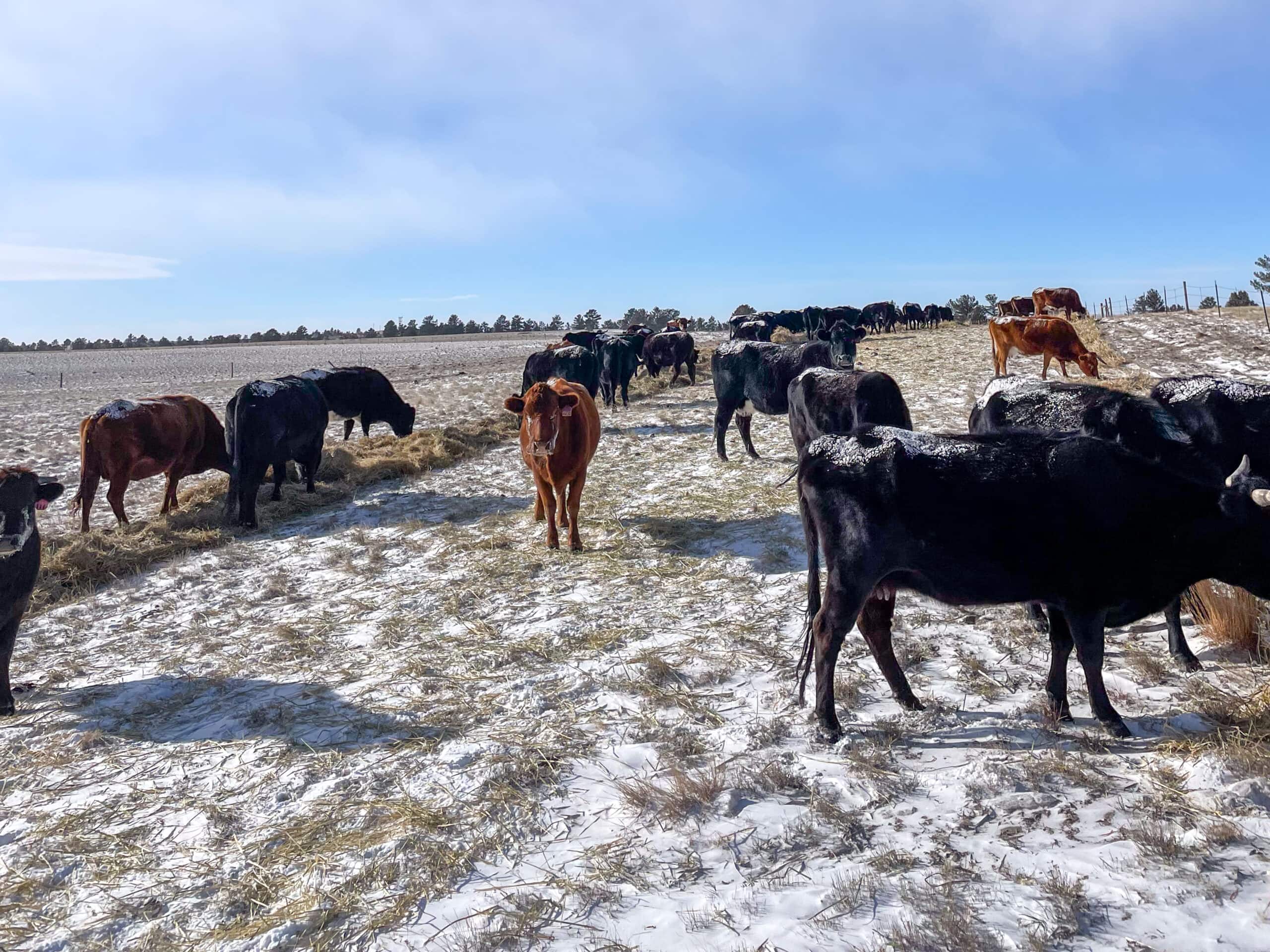
Energy is the primary limiting nutrient during winter. For every 1 degree Fahrenheit drop in wind chill below a cow’s lower critical temperature, generally 20 to 30 degrees for a dry cow with a winter hair coat, energy requirements increase by roughly 1 percent.
Example:
A 1,300-pound mature cow in good condition may require 13 to 14 pounds of TDN per day at 40 degrees. At 0 degrees with a 20 mph wind, that same cow can require close to 22 pounds of TDN per day, a 50 to 60 percent increase.
Crude Protein
Dormant native range and warm-season grasses often test 4 to 6 percent crude protein in winter. Cows in late gestation or early lactation require approximately 8 to 11 percent crude protein. UNL research shows that even mild protein deficiencies reduce fiber digestion and can increase overall feed intake by 20 to 30 percent, driving costs higher.
Vitamins and Minerals
Vitamin A deficiency is common in cows consuming weathered forage or corn crop residues. A single pre-winter vitamin A-D-E injection or consistent mineral supplementation helps prevent weak calves and supports timely rebreeding.
Proven Winter Feeding Strategies Used by Top Producers
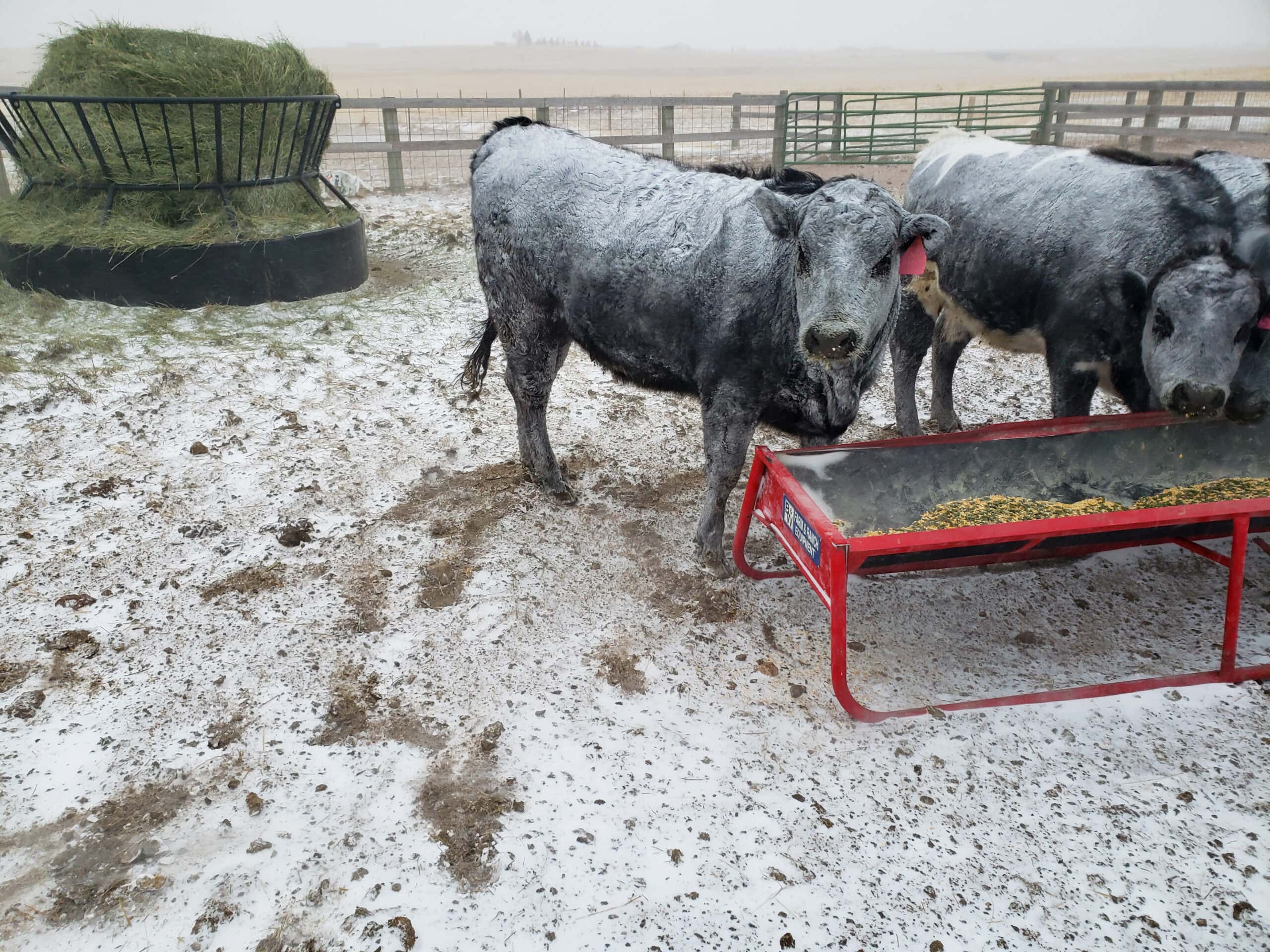
Test Your Forage Every Year
Research from the University of Nebraska–Lincoln shows that even mild protein deficiencies reduce fiber digestion and can increase overall feed intake by 20 to 30 percent, driving costs higher.
Typical regional forage values:
-
Sandhills meadow hay: 8 to 11 percent CP, 52 to 58 percent TDN
-
Late-cut warm-season grass hay: 5 to 7 percent CP, 48 to 54 percent TDN
-
Grazed corn stalk residue: 4 to 6 percent CP, 50 to 55 percent TDN
Use the Nebraska Limit-Grazing Plus Supplement System
One of the most cost-effective systems across Nebraska, South Dakota, Wyoming, and Colorado combines grazing with targeted supplementation:
-
Allow cows to graze corn stalks or dormant grass for four to six hours per day
-
Provide 20 to 30 pounds of good-quality hay plus either 2 to 4 pounds of alfalfa or 1 to 2 pounds of distillers grains in the afternoon
Research from UNL’s Gudmundsen Sandhills Laboratory shows this approach can reduce harvested feed needs by 40 to 50 percent while maintaining a body condition score of 5.5 to 6.0 at calving.
Strategic Use of Distillers Grains and Alfalfa
Distillers grains are widely available and cost-effective in Nebraska, eastern Colorado, and parts of South Dakota.
-
Feeding 2 to 4 pounds per head per day of dried or modified distillers grains supplies both energy and bypass protein
-
In many rations, distillers grains can partially or fully replace alfalfa at a lower cost per unit of nutrient
Windbreaks and Bedding Reduce Feed Costs
For every 10 mph increase in wind speed, a cow’s energy requirement increases by roughly 13 percent. Well-designed windbreaks, shelterbelts, and dry bedding routinely reduce winter feed costs by 10 to 20 percent by limiting cold stress.
Target Body Condition Scores for Winter Success
UNL research provides clear benchmarks:
-
Mature cows should enter winter at a BCS of 5.5 to 6.0
-
First-calf heifers should enter winter at 6.0 to 6.5
-
Cows should calve at 5.5 to 6.0 to achieve 85 to 90 percent rebreeding within the first 45 days
Maintaining condition through winter is significantly more cost-effective than trying to add condition after calving.
Winter Feeding Cost-Saving Checklist
-
Test all hay and forages before feeding
-
Monitor body condition score monthly using the UNL BCS chart
-
Provide adequate wind protection and dry bedding
-
Supplement protein when hay tests below 7 percent crude protein
-
Use corn stalks, cover crops, or residue grazing when available
-
Feed highest-quality forage to late-gestation and early-lactation cows
-
Increase energy intake 10 to 20 percent ahead of major winter storms
Final Thought
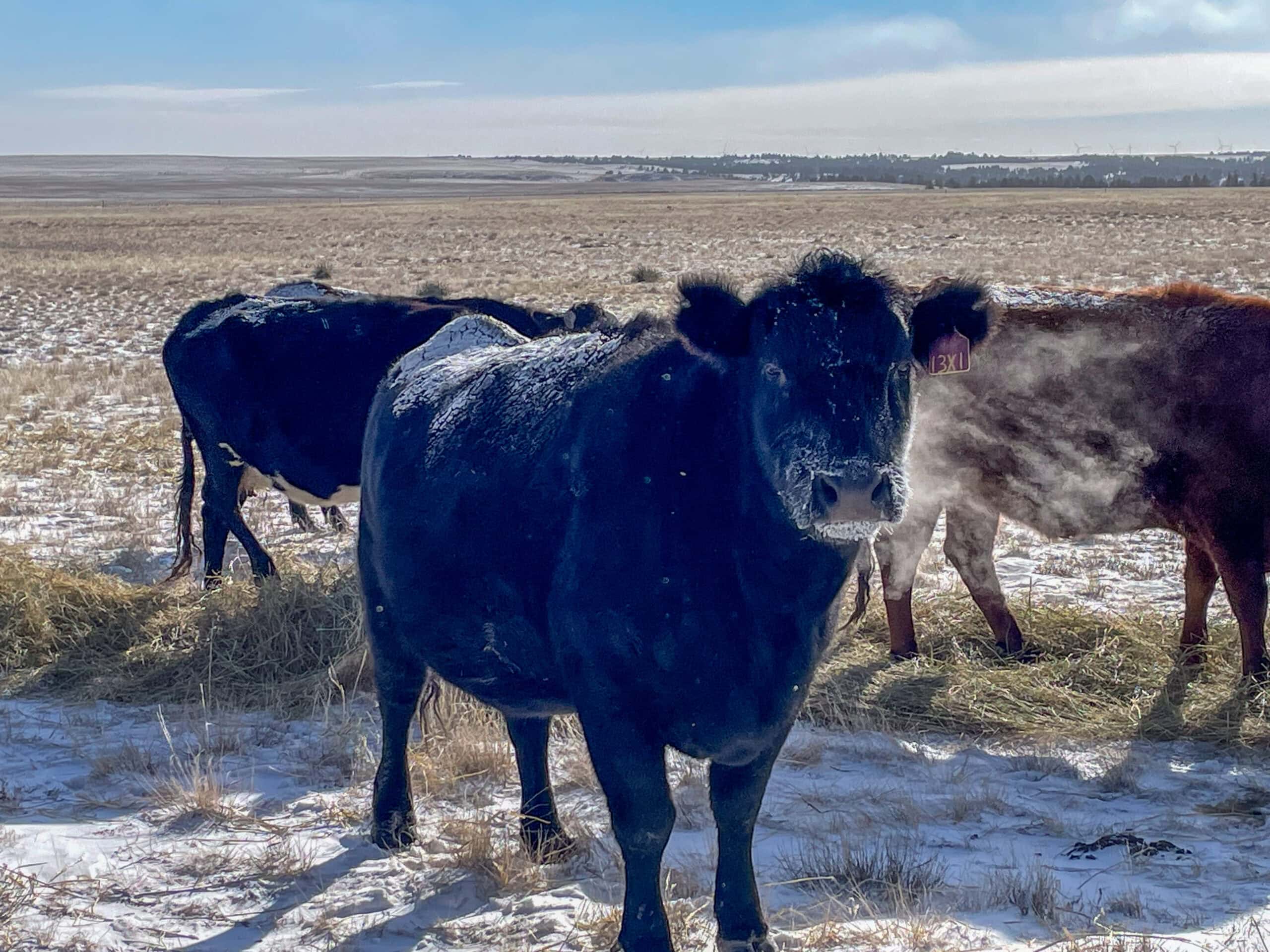
Winter feeding does not have to overwhelm your budget. By understanding cold stress, matching supplementation to forage quality, and applying research-backed strategies from the University of Nebraska–Lincoln, producers across Nebraska, South Dakota, Wyoming, and Colorado can maintain cow condition, protect reproductive performance, and control feed costs.
Healthy, productive cattle are also a major driver of ranch value. At #1 Properties Ranch & Recreation, we help buyers and sellers evaluate forage resources, carrying capacity, and winter feeding infrastructure as part of every land transaction.
Ready to explore ranch properties with proven winter grazing systems and strong water development?
Contact our team for a free consultation or browse current listings across Nebraska, South Dakota, Wyoming, and Colorado.